A gate is the first thing a visitor touches. It’s also the first thing a burglar shakes. Good metal gate design has to pass both tests, and it has to keep passing them after ten winters of rain, salt, kids’ bikes and the occasional reversing van.
Below you’ll find the stuff that actually matters: which metal to pick, which styles are working right now, and where people tend to waste money. It covers homes, farms, yards and offices. Skip around if you like.
Metal Gate Design Starts With the Metal
Most people open Pinterest first. Wrong order. The material decides what you can build, how much it weighs and how often you’ll be out there with a paintbrush.
Steel is the default for good reason. It’s strong, it welds well, and it won’t empty your wallet. Galvanize it, powder coat it, and it’ll handle most climates.
Wrought iron looks heavier and older, in a nice way. It also rusts if you ignore it.
Aluminum is light and never rusts. It’s a smart pick for a wide driveway where a big steel leaf would drag on the hinges.
One question settles most arguments: what can your posts carry? Answer that and half the decisions make themselves.
Steel Gate Design or Iron Gate Design?
They look similar from the road. Up close, they behave differently.
A solid steel gate design gives you slim frames and sharp corners. Fabricators can bend it, cut it and weld it into almost anything, which is why most new projects go this way.
An iron gate design tends toward scrolls, curls and hand-forged detail. Beautiful. Also needy. A chip in the paint becomes a rust bloom by spring if you don’t touch it up. If you enjoy that kind of upkeep, iron pays you back. If you want to forget the gate exists, pick steel with a decent coating.
Modern Metal Gate Design Keeps Getting Simpler
Gate trends move slowly. Nobody wants to rip one out after three years. Still, a few things keep turning up.
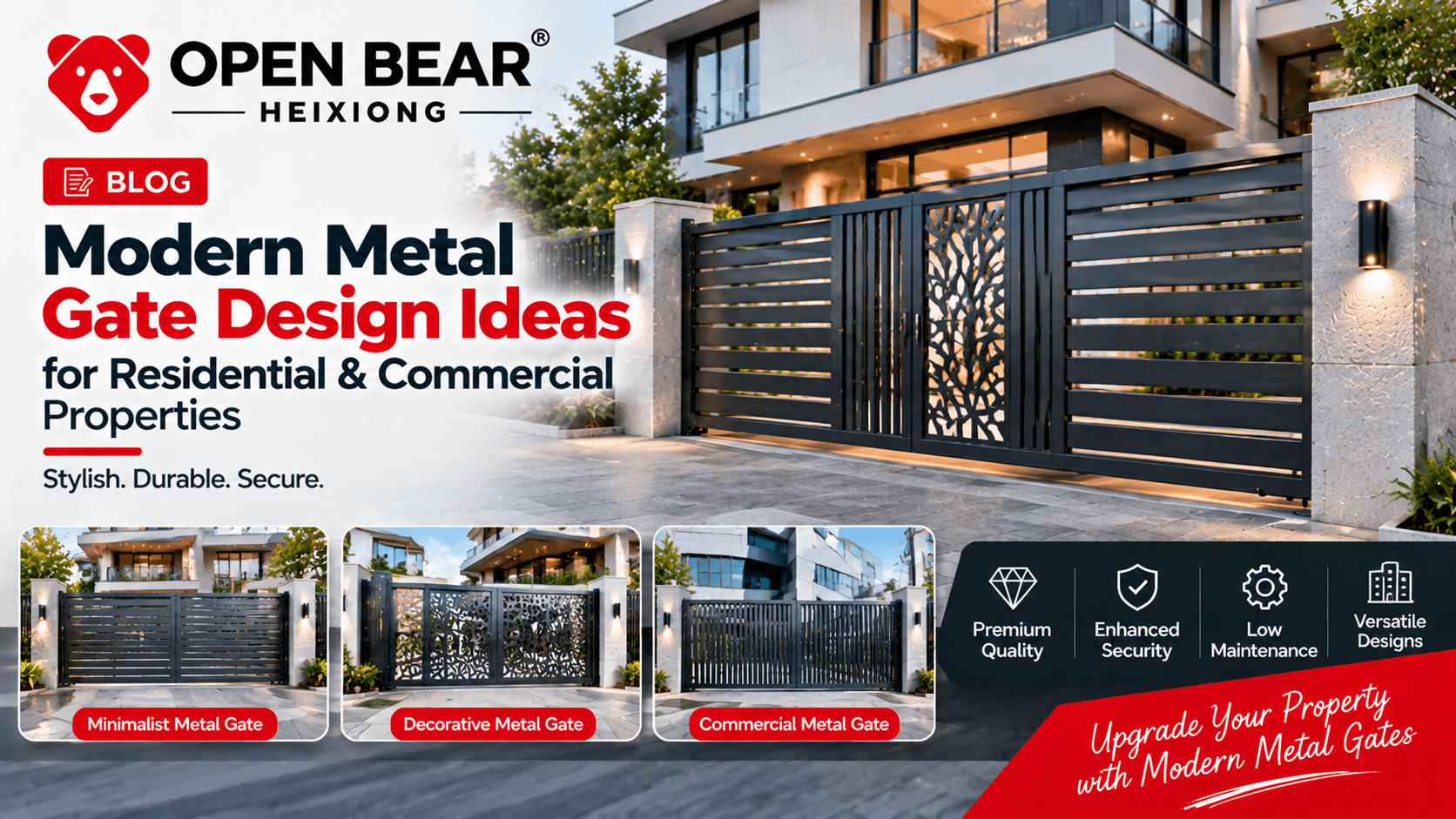
Modern metal gate design is mostly about leaving things out. Flat black or charcoal. Thin lines, either horizontal or vertical. Latches and hinges tucked inside the frame so nothing sticks out.
Warm colors are sneaking in, though. Bronze powder coat, rust-look finishes and wood-grain wraps soften all that hard metal, and they sit nicely against brick or timber.
And privacy matters more than it used to. Open bars are giving way to semi-solid panels. You still get light and airflow, but the street can’t see your driveway.
What Makes a Laser Cut Metal Gate Look Custom?
A laser cut metal gate starts as a flat sheet. Then it becomes a pattern: leaves, geometric grids, a skyline, your house number, maybe your surname. The laser repeats it perfectly every time, which is hard to do by hand.
The best part shows up in the afternoon. Sun passes through the cutouts and throws the pattern across your driveway. It moves as the day goes on. Owners mention this more than anything else.
Two cautions. Fine detail needs thicker steel, or the panel flexes. And dense patterns give privacy while sparse ones give a view, so decide which you want before you place the order.
Vertical Metal Gate Design for Security
Upright bars are tough to climb. Horizontal rails are basically a ladder.
A tidy vertical metal gate design also makes a frontage look taller and a bit more formal. Watch the spacing. Gaps that are too wide let small dogs and toddlers through, and some areas have rules about it. Flat-topped pickets look newer than pointed ones, but that’s taste.
Got a dog? Add a solid panel along the bottom. It also keeps leaves and litter out.
Decorative Metal Gate Ideas That Don’t Shout
A decorative metal gate doesn’t need spears and swirls everywhere. One good feature is enough: a curved top rail, a bold shape in the middle, a brass-colored handle, a contrasting inlay.
Try describing your gate in one sentence. If you can’t, it’s probably doing too much.
Where a Heavy Duty Metal Gate Earns Its Keep
Warehouses, depots, schools and car parks take a beating. Trucks clip them. Wind slams them. Hundreds of cycles a day add up.
A heavy duty metal gate uses thicker tube, boxed frames, reinforced corners and oversized hinges. Looks come second here, although it can still look sharp.
Weight drives everything downstream. A heavy leaf needs deep footings, strong posts and an operator rated for the load. When you start looking at motors, pick a commercial gate opener based on weight and daily cycles, not just width.
Cheap Outdoor Metal Gate Ideas That Make a Difference
Plenty of outdoor metal gate ideas cost very little:
- Cut your house number or name into the panel
- Run low-voltage lights along the posts
- Match the powder coat to your window frames
- Frame the gate with brick or stone pillars
- Plant climbers beside it
- Add a small walk-through door so you aren’t opening the whole gate for a quick trip to the mailbox
Picking a Metal Entrance Gate for Your Layout
A metal entrance gate has to fit the space, not just the style. Measure the opening, then look around it. Slopes, walls, trees and a neighbor’s driveway all change how the gate can move.
Most sites end up with one of three layouts:
- Swing gates open like doors. They suit flat ground with room to spare.
- Sliding gates run along the fence. If space beside the opening is tight, read up on Sliding Gate Design.
- Rolling gates ride on a track or wheels, and they handle wide openings well. Some good Rolling Gate Ideas are worth a look.
Think about motors early. Fitting an automatic driveway gate system later is easy when the posts and wiring route were planned from day one. It’s a pain when they weren’t.
Finish and Upkeep Decide How Long It Lasts
Coating is where most gates win or lose. Hot-dip galvanizing plus powder coat lasts longest, especially near the sea. Cheap spray paint on bare steel looks fine for a year. Then it bubbles.
Upkeep is small. Wash with mild soap twice a year, check hinges and latches, and fix chips quickly. Do that and a decent gate runs for decades.
Ready to Plan Your Gate?
A gate is a working part of your property as well as a design feature. The right one looks good from the street, locks properly at night and doesn’t give you grief.
Grab your opening width, a rough weight and a sketch of the layout, then get a quote. Our team will help you match the design to the right opener and hardware.

Frequently Asked Questions
Key engineering and selection answers regarding this topic
Galvanized, powder-coated steel suits most properties. Aluminum is better for lighter gates or salty air because it won’t rust.
A boxed steel frame, galvanized then powder coated. Solid welds, strong hinges and deep footings count as much as the metal.
Only a little. Wash twice a year, oil the moving parts and repair coating chips quickly.
Yes. They give privacy, a custom look and plenty of strength if the steel is thick enough. Check pattern density against how private you want to be.
Yes. Plan posts, power and wiring up front so a motor fits without rework.
Usually, yes. Steel is lighter, easier to shape and simpler to maintain. Iron wins when you want a traditional forged look.
Explore Related Automation Systems
Looking for motors, hardware, or installation systems mentioned in this guide? Discover our factory-direct gate opener range:
All Gate Openers
Browse DC24V sliding, swing & barrier operators with full factory warranty.
Explore Products →Residential Gate Operators
Ultra-quiet, solar-ready sliding & swing gate motors for homes and villas.
Residential Solutions →Commercial Gate Systems
Continuous-duty operators for gated communities, business parks & parking.
Commercial Solutions →Industrial Heavy-Duty
High-torque motors engineered for gates up to 4,000 kg and logistics hubs.
Industrial Solutions →