Before You Pick a Gate, Read This
I’ve seen a lot of driveways where the owner spent a fortune on the house and then bolted a cheap gate on at the end. It rattles, it drags, and within two winters it sits crooked on its track. Nobody plans for that part.
So here are some rolling gate ideas that hold up in real use. Some are about looks. Most are about avoiding the annoying stuff: a jammed wheel, a motor that quits in July, a gate that clashes with the house. Skip whatever doesn’t fit your property.
Rolling Gate vs Swing Gate: Why Sliding Often Wins
A swing gate needs room to travel in an arc. Park a car in that arc, or build on a slope, and you’re stuck. A rolling gate just slides along the fence, so the space in front of it stays free.
That’s what makes a sliding rolling gate the usual pick for short driveways. Snow doesn’t pile up against it, and wind has less surface to shove around.
The one thing people forget is the side run. You need roughly the gate’s width in clear fence beside the opening. If there’s a tree or a neighbor’s wall in the way, the whole plan changes. Measure first, shop second.
What a Modern Rolling Gate Design Really Looks Like
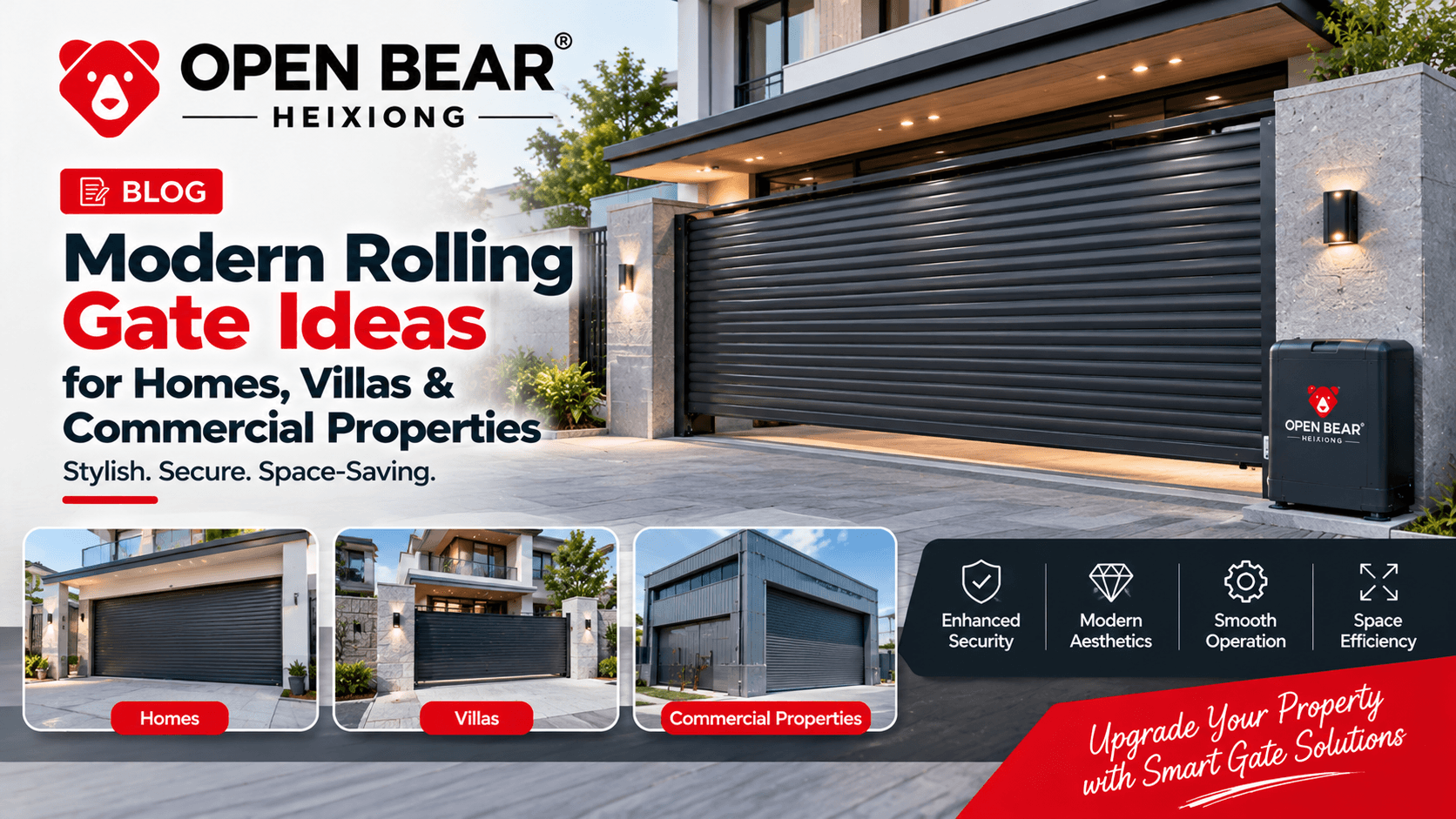
Honestly, a good modern rolling gate design is the one that doesn’t try too hard. One material, straight lines, maybe a single detail that catches the eye.
Horizontal slats are everywhere right now, and for good reason: they look warm and they match almost any newer house. Laser-cut panels are the other big one. You get privacy, but a little light still gets through, which stops the gate from looking like a wall. Some owners go for black steel with wood-look strips. It’s a nice mix if you don’t overdo the wood.
Stick with charcoal, matte black, bronze or off-white. If you want color, pick one panel and leave the rest alone. A modern gate design like that won’t feel old in five years.
Villa Rolling Gate Design: Make the Entrance Count
A villa wall is long, the drive is wide, and the gate is the first thing a visitor sees. A timid gate looks lost there.
A villa rolling gate design usually goes taller and heavier than a house gate. Stone or brick pillars frame it, the house number is set into the post, and small lights sit in the pillar caps. Most villa owners also want privacy, so solid or nearly solid panels beat open bars.
If you’re comparing styles, have a look at Villa Gate Design and notice how much pillar height and lighting change the view from the road.
Metal Rolling Gate: Steel, Aluminum or Something Else?
For most sites a metal rolling gate is the sensible choice. The question is which metal, and it depends on where you live.
Steel is the best value for wide, heavy gates, but only if the coating is good. Cheap paint on steel is basically a rust invitation. Aluminum weighs less, so the motor works less, and it handles damp or coastal air well. Wrought iron looks lovely and needs repainting more often than owners expect. Stainless is the toughest against corrosion, and you pay for that.
Ask the supplier how thick the powder coating is and what the warranty covers. Their answer tells you a lot. More finish options are on our Metal Gate Design page.
Outdoor Rolling Gate: Planning for Rain, Dust and Ice
An outdoor rolling gate sits out there through rain, dust, heat and frost with nobody watching it. Most failures I hear about come from the track, not the gate.
Gravel and leaves end up in an open track and jam the wheels. A covered track fixes that. Water that pools at the base rusts good metal from below, so slope the concrete away. In freezing areas, raise the track a little so ice can’t lock the wheels.
Once a month, wipe the track and spin a wheel by hand. If it feels rough, add lubricant. That’s about ten minutes, and it heads off most service calls.
Commercial Rolling Gate: Built for Trucks, Not Just Looks
Put a home gate at a loading yard and it won’t last a season. A commercial rolling gate deals with trucks, delivery drivers and hundreds of cycles every week.
That means thick-wall steel in the frame, heavy wheels, and a track set into solid concrete rather than loose pavers. Add safety sensors, proper signs and a card reader or keypad so you know who’s coming through. And think about power cuts now, not during one. Battery backup or an easy manual release saves a bad afternoon.
Then there’s the motor. A correctly sized commercial gate opener is what keeps things moving at 8 a.m. when five trucks are lined up.
Automatic Rolling Gate: Worth It?
An automatic rolling gate takes the daily shove out of your life. Pushing a heavy panel in the rain gets old quickly.
You can run it with a remote, a keypad or a phone app. Sensors stop it if a child, a dog or a bumper is in the way. A timer closes it behind you, which matters more than people think, because plenty of gates sit open all night by accident. Some systems log every entry too.
Pick the motor by the gate’s weight and length, then give yourself headroom. A motor that works at roughly 60 percent of its rating outlasts one that’s maxed out every day.
Which Gate Suits Property?
- For a family home, a slim aluminum gate with horizontal slats, a keypad and a small light by the track does the job.
- Villas can carry taller panels, stone pillars and a video intercom, so you see who’s there before you open up.
- Shops and warehouses need something heavier: a steel frame, a see-through strip near the top so staff can spot approaching vehicles, and a card reader with an entry log.
- A small office can get by with a mid-weight coated steel gate and remotes for the team.
For more layouts, read about Sliding Gate Design before you commit. A gorgeous gate that jams every rainy week is still a bad gate.
Next Step
Measure the opening. Check the clear space beside it. Decide how much privacy you want. Then pick a design and size the motor to the gate’s weight.
Not sure about sizing or layout? Contact our team and we’ll help you sort it out for a gate and opener built around your entrance.

Frequently Asked Questions
Key engineering and selection answers regarding this topic
Use a slim sliding panel that runs along the fence, with a compact motor and a keypad. It keeps the driveway clear and saves space.
Vertical bars or narrow vertical slats look tall and tidy. Black or bronze powder-coated steel keeps upkeep low.
Wide solid panels, stone pillars, a hidden track, built-in lighting and smart access give a premium finish.
Slim aluminum frames, horizontal slats and neutral colors suit most houses. Phone control makes daily use easier.
Combine metal with wood-look inserts, add a number plate and soft lighting, and keep the colors simple.
Explore Related Automation Systems
Looking for motors, hardware, or installation systems mentioned in this guide? Discover our factory-direct gate opener range:
All Gate Openers
Browse DC24V sliding, swing & barrier operators with full factory warranty.
Explore Products →Residential Gate Operators
Ultra-quiet, solar-ready sliding & swing gate motors for homes and villas.
Residential Solutions →Commercial Gate Systems
Continuous-duty operators for gated communities, business parks & parking.
Commercial Solutions →Industrial Heavy-Duty
High-torque motors engineered for gates up to 4,000 kg and logistics hubs.
Industrial Solutions →